What?
Think back to Symmetric Encryption, where everyone necessary already has the key. How do you communicate securely with someone who doesn’t already have a key? (Called Asymmetric because there’s 2 keys involved).
Public Key Encryption:
You can openly share the Public Key with people, and it’s good to encrypt everything. To decrypt, however, you need a Private Key.
How it works:
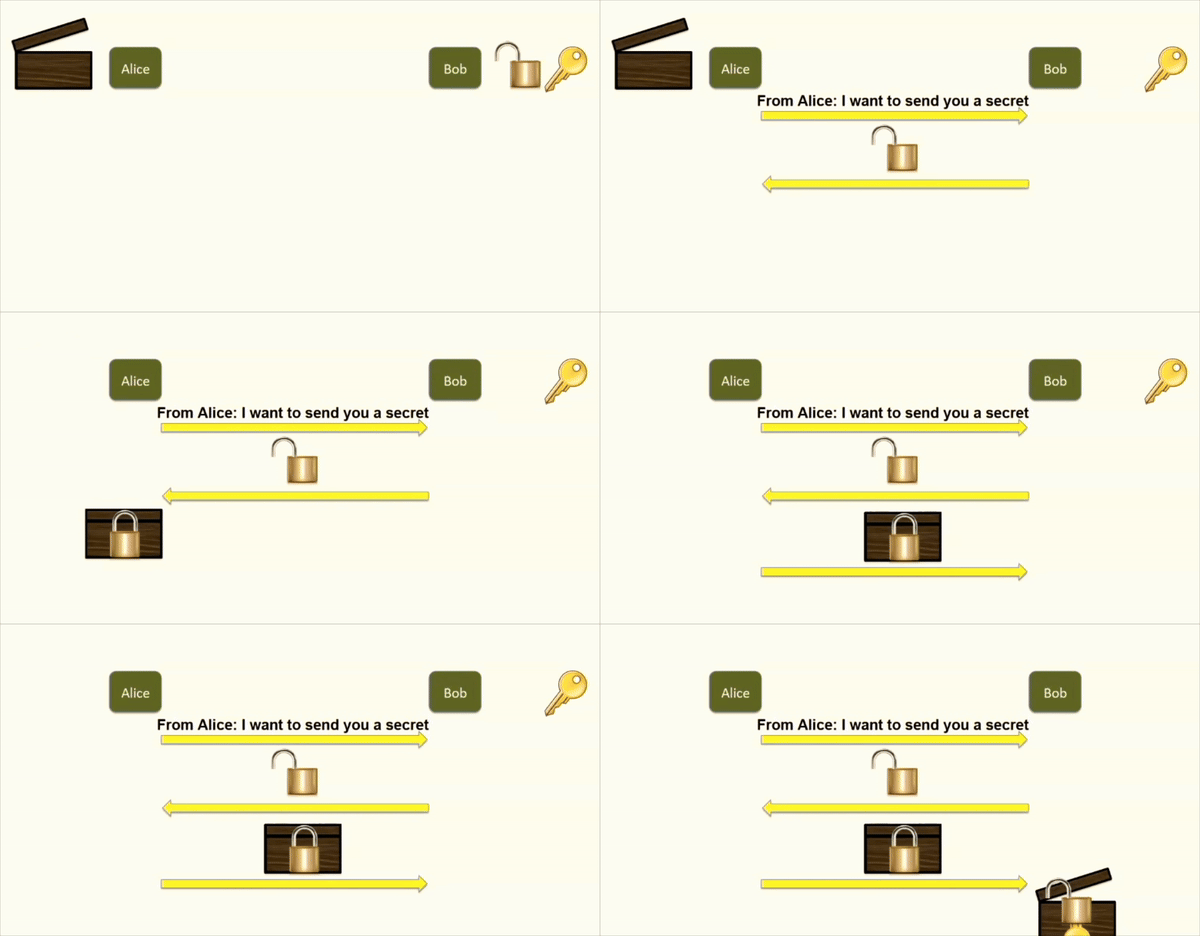
- Bob will first generate a Private Key and Public Key pair. (Analogous to a key and padlock respectively, everyone can lock but only the key-holder can unlock). Most keys use the RSA Algorithm.
- Alice will request the public key (padlock) from Bob. Bob will send it
- Alice will encrypt her message using the public key and send it to Bob.
- Bob can decrypt her message using his private key.
- They will now repeat this process for Alice, so she can now decrypt Bob’s encrypted messages.
Double Encryption (Italicised cos it’s cool.)
- If you encrypt something with Alice’s public key, then only her private key can open it.
- If something’s encrypted with your private key (of which only you have), then only your public key can decrypt it.
- Therefore, if you encrypt something with both your private key and then Alice’s public key, then Alice can be sure that that only she would’ve been able to open that message and that it definitely came from you (in that order).
- If something you encrypt something with your public key, then only your private key can open it.